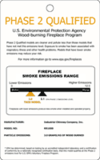
Burn Wise EPA
United States Environmental Protection Agency (EPA)
EPA's voluntary program identifying cleaner-burning wood stoves, fireplaces, and boilers
The Burn Wise EPA costs $0 USD. Renewal costs $0 USD.
Key Strengths
- Backed by the U.S. Environmental Protection Agency, a trusted federal authority
- Covers multiple appliance types: woodstoves, fireplaces, and hydronic heaters
- Helps consumers identify cleaner-burning appliances via visible hang tags
- Supports compliance with PM2.5 National Ambient Air Quality Standards
- Free voluntary program with no application fees for manufacturers
Ideal For
Best suited for wood-burning appliance manufacturers seeking to demonstrate their products meet EPA voluntary emission standards. Also valuable for retailers, distributors, and consumers looking to identify cleaner-burning wood heaters such as woodstoves, fireplaces, and outdoor wood boilers.
Target Audiences
Industries
Alignment & Recognition
Accrediting Body
Building Scope
Overview
Burn Wise is a voluntary partnership program run by the U.S. Environmental Protection Agency (EPA) designed to reduce harmful particle pollution from residential wood burning. The program sets voluntary emission standards for three categories of wood-burning appliances — woodstoves, fireplaces, and hydronic heaters (outdoor wood boilers) — and awards "EPA-qualified" status to products that meet those limits. Qualified appliances typically display a hang tag to make them easy to identify at the point of sale.
The program is primarily aimed at wood-burning appliance manufacturers who want to demonstrate that their products burn more cleanly than unqualified alternatives. It is also useful for retailers, distributors, and consumers who want to make informed purchasing decisions. Participation is free for manufacturers, and qualifying products gain a meaningful market differentiator backed by federal credibility.
It is worth noting that "EPA-qualified" status under Burn Wise is distinct from "EPA-certified" status under EPA's mandatory Wood Heater New Source Performance Standards (NSPS) regulation. The Burn Wise program ran from 2009 to 2025 in support of PM2.5 National Ambient Air Quality Standards; as of late 2025, EPA is no longer updating program content, though the existing database of certified appliances and educational resources remain available as a historical reference.
Requirements & Verification
Evidence Requirements
Conformity with Burn Wise EPA's standard is verified by the company or organization applying for the label (first party).
Prerequisites
Assessment Process
Appliances are evaluated by EPA-recognized third-party test laboratories against EPA's voluntary emission standards. For fireplaces and hydronic heaters, testing is based on pounds of particle pollution per million BTUs of heat output and grams/kilogram, respectively. Manufacturers submit test results to EPA for review and approval before receiving EPA-qualified status and permission to display the voluntary hang tag.
Renewal & Compliance
The Burn Wise Program officially ran from 2009 to 2025 and is no longer actively updated as of October 30, 2025. No formal renewal cycle has been published; manufacturers should consult EPA's current regulatory requirements under the Wood Heater NSPS for ongoing compliance obligations.
Accountability Model
Impact & Outcomes
Salary & Market Value
Not applicable. This is a product-level qualification program for wood-burning appliances, not a professional certification with salary implications.
Consider Alternatives If...
Manufacturers seeking full regulatory certification under EPA's Wood Heater New Source Performance Standard (NSPS) should note that EPA-qualified status is distinct from EPA-certified status. Organizations outside the U.S. or those dealing with non-wood-burning heating appliances will find this program irrelevant.
Alternative Programs
How to Get StartedAI-synthesized
Step 1: Confirm Applicability Determine whether your wood-burning appliance (woodstove, fireplace, or hydronic heater/outdoor wood boiler) falls within the scope of the Burn Wise voluntary program. Note that as of October 30, 2025, the program is no longer actively updated, but the EPA-certified wood heater database and voluntary hang tag guidelines remain available.
Step 2: Review Voluntary Emission Standards Download and review EPA's voluntary emission limits for your appliance category. For fireplaces, limits are expressed in pounds of particle pollution per million BTUs; for hydronic heaters, in grams per kilogram of fuel burned.
Step 3: Identify an EPA-Recognized Test Laboratory Select an EPA-recognized third-party test laboratory from EPA's list of approved test labs. The lab must be proficiency-tested under EPA's Wood Burning Appliance Test Lab Proficiency Test Program.
Step 4: Conduct Emissions Testing Have your appliance tested at the recognized lab against the applicable voluntary emission standard. Ensure all test methods used are currently approved by EPA (note: ALT-125 and ALT-127 have been withdrawn).
Step 5: Compile and Submit Test Results to EPA Prepare a submission package including lab test reports and relevant product documentation. Submit to EPA for review and approval.
Step 6: Receive EPA-Qualified Status Upon EPA's review and approval of your test results, your appliance receives EPA-qualified status. You may then display the voluntary hang tag on qualifying products at point of sale.
Step 7: Consult NSPS Requirements for Mandatory Compliance If your product also requires mandatory certification under EPA's Wood Heater New Source Performance Standards (NSPS), pursue that process separately through EPA's regulatory compliance pathway.
What Gets EvaluatedAI-synthesized
The Burn Wise program evaluates wood-burning appliances against EPA's voluntary emission limits for fine particulate matter (PM2.5). Assessment is conducted by EPA-recognized third-party test laboratories using standardized test methods.
Woodstoves: Evaluated against voluntary emission limits for particulate matter output, typically expressed in grams per hour (g/hr). The voluntary standards under Burn Wise were generally more stringent than the pre-2020 mandatory NSPS limits, encouraging manufacturers to meet the cleaner 2020 NSPS Step 2 thresholds ahead of regulatory deadlines.
Fireplaces: Tested for particle pollution output expressed in pounds of particulate matter per million BTUs (lbs/MMBtu) of heat output. EPA's voluntary fireplace program sets specific thresholds that qualifying units must not exceed.
Hydronic Heaters (Outdoor Wood Boilers): Evaluated on a grams-per-kilogram (g/kg) of fuel burned basis. EPA established Phase 2 voluntary emission limits for outdoor wood boilers that were significantly more stringent than Phase 1 limits, incentivizing manufacturers to develop cleaner technology.
All testing must be conducted using EPA-approved test methods. The withdrawal of broadly applicable alternative test methods ALT-125 and ALT-127 means manufacturers must use currently approved methods. EPA reviews submitted test data before granting qualified status and permission to display the voluntary hang tag.
Market Context & AdoptionAI-synthesized
The Burn Wise program occupied a niche but meaningful space in the U.S. residential heating appliance market, serving as a voluntary bridge between older, less stringent mandatory NSPS standards and the more demanding 2020 NSPS Step 2 requirements. By encouraging manufacturers to voluntarily meet tighter emission limits ahead of regulatory deadlines, the program helped accelerate the market transition to cleaner-burning appliances. The EPA-qualified hang tag became a recognized point-of-sale differentiator, particularly in markets where air quality regulators and local governments encouraged or required the use of cleaner wood heaters.
Adoption was concentrated among leading U.S. and some international wood-burning appliance manufacturers, particularly those selling into states with strict air quality regulations such as California, Oregon, Washington, and Colorado. State and local air agencies, as well as wood stove changeout programs funded through EPA grants, frequently referenced Burn Wise qualified status as a criterion for rebate eligibility. However, the program was always voluntary and never achieved universal industry adoption — many manufacturers chose to meet only the mandatory NSPS floor rather than pursue the voluntary qualification.
The program's closure in 2025 reflects the maturation of the regulatory landscape: the 2020 NSPS Step 2 standards now mandate emission limits that are comparable to or more stringent than what Burn Wise previously incentivized voluntarily. The mandatory certification database (EPA-certified wood heater database) has effectively superseded the voluntary program's market differentiation function. Going forward, the relevant benchmark for consumers and regulators is EPA certification under NSPS, not Burn Wise qualified status.
History & EvolutionAI-synthesized
The Burn Wise program was launched by the U.S. Environmental Protection Agency in 2007 (with active partnership operations beginning around 2009) in response to growing evidence that residential wood burning was a significant contributor to fine particulate matter (PM2.5) pollution in many U.S. communities. At the time, EPA's mandatory Wood Heater New Source Performance Standards had not been substantially updated since 1988, leaving a regulatory gap between what the law required and what cleaner technology could achieve. Burn Wise was designed to fill that gap voluntarily by encouraging manufacturers to produce and market appliances that burned more cleanly than the law required.
Over its operational life from 2009 to 2025, the program established voluntary emission tiers for woodstoves, fireplaces, and outdoor wood boilers (hydronic heaters), and maintained a public database of qualified products. The program supported EPA's broader PM2.5 National Ambient Air Quality Standards attainment goals and was used by state and local agencies as a reference for wood stove changeout programs and incentive schemes. When EPA finalized the updated Wood Heater NSPS in 2015 (with Step 2 limits taking effect in 2020), the mandatory standards began to converge with Burn Wise's voluntary thresholds. By 2025, with the 2020 NSPS Step 2 standards fully in force, the voluntary program had largely served its purpose, and EPA formally closed it on October 30, 2025, retaining the website as a historical record.
Frequently Asked Questions
Quick Facts
Credential
English
2007
Cost Breakdown
How to Display This Recognition
Credential Details
Assessment
Verification
Structure
Governance
Related Certifications
WaterSense labeled products
United States Environmental Protection Agency (EPA)
WaterSense labeled commercial buildings
United States Environmental Protection Agency (EPA)
EPA Lead-Safe Certification
United States Environmental Protection Agency (EPA)
WaterSense partner
United States Environmental Protection Agency (EPA)
Indoor Air Plus Qualified Home
United States Environmental Protection Agency (EPA)

Safer Choice Certified
United States Environmental Protection Agency (EPA)
Sources & Citations
Content on this page is AI-enriched from primary sources.
Program WebsiteUnited States Environmental Protection Agency (EPA)Last verified Jul 27, 2026