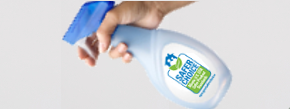
Safer Choice Certified
United States Environmental Protection Agency (EPA)
EPA's Safer Choice labels products with safer chemicals.
The Safer Choice Certified costs $0 USD. Over 2,000+ products have earned this certification worldwide. Renewal costs $0 USD every 12 months.
Key Strengths
- Backed by the U.S. EPA, providing strong government credibility
- Recognizable consumer-facing label on product packaging
- Comprehensive chemical-by-chemical safety review process
- Covers both human health and environmental safety criteria
- Supports access to institutional and sustainability-focused procurement channels
- Free to apply — no application fee charged by EPA
Ideal For
This certification is best suited for product manufacturers — particularly in cleaning, personal care, and household product categories — who want to differentiate their products by demonstrating safer chemical formulations. It is especially valuable for brands targeting environmentally conscious consumers, institutional purchasers, or retailers with sustainability procurement policies.
Target Audiences
Industries
Alignment & Recognition
Accrediting Body
Product Categories
Overview
The Safer Choice program by the EPA helps consumers find products that contain safer chemical ingredients. Started in 1997, it provides a certification label for products meeting strict safety criteria. To get certified, products must use chemicals that are safer for humans and the environment. Over 2,000 products have earned the Safer Choice label. The program partners with many businesses, including major brands like Clorox and SC Johnson, to ensure product safety. Companies that meet the criteria get to use the Safer Choice label on their products, signaling trust and safety to consumers.
Requirements & Verification
Evidence Requirements
Manufacturers must submit complete product formulations, including the identity and function of every ingredient. Each ingredient is evaluated against the EPA's Safer Chemical Ingredients List (SCIL). Products must also meet performance, packaging, and pH safety criteria. Manufacturers provide Safety Data Sheets and supporting documentation for all chemical components. EPA staff review submissions and may request additional data before granting certification.
Prerequisites
Assessment Process
There is no exam. EPA staff conduct a detailed desk-based review of the product's complete chemical formulation. Each ingredient is assessed against the Safer Chemical Ingredients List (SCIL) for human health and environmental safety. Manufacturers must provide full ingredient disclosure, Safety Data Sheets, and supporting documentation. EPA reviewers may request additional data or reformulation before certification is granted. The review timeline varies based on formulation complexity and responsiveness of the manufacturer.
Renewal & Compliance
Certified products must maintain compliance with the Safer Choice Standard on an ongoing basis. Manufacturers are required to notify the EPA of any formulation changes and resubmit for review if ingredients are altered. The EPA conducts periodic reviews of certified products to ensure continued compliance. There is no fixed renewal fee charged by the EPA.
Accountability Model
Impact & Outcomes
Salary & Market Value
Not applicable. This is a product-level certification for manufacturers, not an individual professional credential. Certified products may command a price premium and improve access to sustainability-focused retail and institutional procurement channels.
Employer Recognition
Consider Alternatives If...
Manufacturers with complex formulations containing restricted or unreviewed chemical ingredients may find the process lengthy or infeasible. Companies outside the cleaning, personal care, or related consumer product sectors may find limited relevance or consumer recognition for this label.
Alternative Programs
How to Get StartedAI-synthesized
- Review the Safer Choice Standard: Download and study the current Safer Choice Standard from the EPA website to understand all chemical, performance, packaging, and pH requirements your product must meet.
- Assess your formulation: Conduct an internal review of every ingredient in your product against the EPA's Safer Chemical Ingredients List (SCIL). Identify any ingredients that may not meet the criteria and consider reformulation.
- Prepare documentation: Compile complete product formulation data, Safety Data Sheets (SDS) for all ingredients, and any supporting safety or toxicological data for components not yet listed on the SCIL.
- Submit your application: Contact the EPA Safer Choice program team and submit your product formulation and supporting documentation for review. There is no application fee.
- Respond to EPA review: EPA staff will evaluate each ingredient for human health and environmental safety. Be prepared to respond to requests for additional data or to reformulate ingredients that do not meet the standard.
- Packaging and performance review: Ensure your product also meets Safer Choice requirements for packaging (e.g., no PVC, recyclability) and functional performance standards.
- Receive certification and label authorization: Once EPA approves your submission, you will be authorized to display the Safer Choice label on your product packaging and marketing materials.
- Maintain compliance: Notify EPA of any formulation changes and participate in periodic compliance reviews to retain your certification on an ongoing basis.
Testing & Evaluation CriteriaAI-synthesized
The Safer Choice program evaluates products against the Safer Choice Standard, which covers five primary areas. First, every chemical ingredient — including intentionally added ingredients, preservatives, fragrances, and processing aids — must be assessed for human health and environmental safety. Each ingredient is compared against the EPA's Safer Chemical Ingredients List (SCIL), which categorizes chemicals by their hazard profile. Ingredients that are carcinogenic, mutagenic, reproductive toxicants, persistent bioaccumulators, or acutely toxic are not permitted.
Second, the program evaluates environmental fate and aquatic toxicity. Ingredients must be assessed for biodegradability and potential harm to aquatic ecosystems. Third, packaging requirements are reviewed: products must avoid PVC packaging and meet standards for recyclability or reduced packaging impact where feasible.
Fourth, pH safety is assessed for products that could cause skin or eye irritation based on their acidity or alkalinity. Finally, functional performance is considered — products must actually work as intended, ensuring that safer formulations do not come at the cost of efficacy. Fragrances receive special scrutiny, with manufacturers required to disclose fragrance ingredients and demonstrate they meet Safer Choice fragrance criteria, including restrictions on known allergens and hazardous components.
Market Context & AdoptionAI-synthesized
The Safer Choice program is one of the most recognized government-backed product safety labels in the United States, particularly in the cleaning products, janitorial/sanitation (jan-san), and consumer household product sectors. With over 2,000 certified products from major brands including SC Johnson, Clorox, Ecolab, Seventh Generation, and Procter & Gamble, the program has achieved meaningful market penetration among large consumer goods manufacturers. Its government backing from the EPA gives it a credibility advantage over many private third-party eco-labels.
The program is primarily relevant in North America, though it is increasingly referenced in global sustainability procurement discussions. Institutional and commercial purchasers — including federal agencies, hospitals, schools, and large retailers — often specify Safer Choice certification in their green procurement policies, making it commercially valuable beyond consumer-facing marketing. The U.S. federal government's green procurement guidelines have historically referenced Safer Choice, amplifying its reach.
Competing labels such as EWG Verified, Green Seal, and ECOLOGO occupy similar spaces, but Safer Choice's EPA origin and free-to-apply model lower barriers for manufacturers. However, the program faces ongoing scrutiny regarding the comprehensiveness of the SCIL and the pace at which new chemicals are evaluated. Growing consumer and regulatory interest in "chemical transparency" and ingredient safety — driven by trends like the EU's Green Deal and California's Cleaning Product Right to Know Act — continues to increase the relevance of the Safer Choice label, though some advocates argue the standard could be strengthened further.
History & EvolutionAI-synthesized
The Safer Choice program was established by the U.S. Environmental Protection Agency in 1997 under the name "Design for the Environment" (DfE), originally focused on helping industries identify safer chemical alternatives through partnerships and alternatives assessments. In its early years, DfE worked primarily with industrial sectors to reduce hazardous chemical use in manufacturing processes. Over time, the program expanded its scope to include consumer-facing product certification, allowing manufacturers to display the DfE label on products that met the EPA's safer chemical criteria.
In 2015, the EPA rebranded the consumer product certification component as "Safer Choice" to better communicate the program's purpose to everyday consumers, while retaining the DfE designation specifically for certified disinfectant products. The Safer Choice Standard has been updated periodically to reflect advances in chemical hazard science and to expand the Safer Chemical Ingredients List (SCIL). The program has grown from a small number of pilot partners to over 2,000 certified products across categories including all-purpose cleaners, laundry detergents, dish soaps, floor cleaners, and car care products. It remains a flagship voluntary pollution prevention initiative under EPA's Pollution Prevention (P2) program framework.
Frequently Asked Questions
Quick Facts
Certification
English, Spanish
1997
2K+
Cost Breakdown
How to Use This Label
Certification Details
Assessment
Verification
Structure
Governance
Fee Structure
Related Certifications
WaterSense labeled products
United States Environmental Protection Agency (EPA)
WaterSense labeled commercial buildings
United States Environmental Protection Agency (EPA)
EPA Lead-Safe Certification
United States Environmental Protection Agency (EPA)
Burn Wise EPA
United States Environmental Protection Agency (EPA)
WaterSense partner
United States Environmental Protection Agency (EPA)
Indoor Air Plus Qualified Home
United States Environmental Protection Agency (EPA)
Sources & Citations
Content on this page is AI-enriched from primary sources.
United States Environmental Protection Agency (EPA)Last verified Jul 27, 2026